|
Getting your Trinity Audio player ready...
|
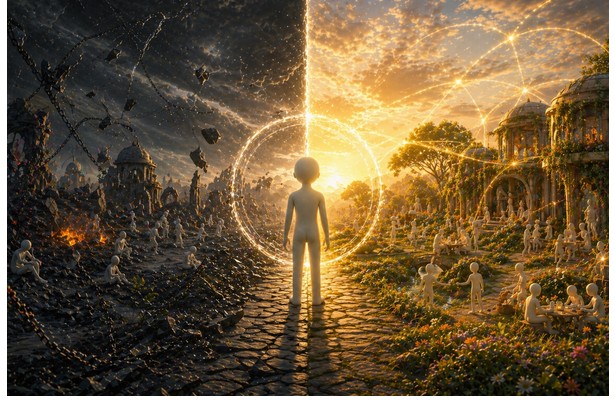
This is actually humanity’s central psychological barrier. Everyone instinctively feels that the problem is outside of them. We naturally justify ourselves, because this is how the ego works. The ego here is defined as our innate desire to enjoy for personal benefit at the expense of others. It protects us from seeing our own flaws. So the automatic reaction is that I am fine, and others are the problem. When 8 billion people think like that, the result is exactly what we see, a broken world.
So how do we shift from blaming others to examining ourselves? It cannot happen through persuasion or moral preaching, because internally we do not feel that we are wrong. That shift usually begins when reality contradicts our self-image. If I am “good,” if I am “right,” if I understand life, then why does my life not work? Why is the world increasingly chaotic, tense, and unstable? That contradiction begins to crack the illusion. At first, we still blame others, then systems, then leaders, then fate. Eventually, however, if we are honest, a deeper question appears: if everyone thinks others are the problem, could it be that the problem is actually in the way I see things?
This is the beginning of real education. True education, in this sense, is not learning information, but the learning to observe oneself. It is when we begin to notice how quickly we judge others, how we automatically justify ourselves, and how we view negativity outside but not inside. Then, instead of seeing the world as a collection of separate people, we begin to experience it as a mirror. Every trait we condemn in others, such as egoism, pride, deception, or indifference, we start to recognize within ourselves.
At this juncture, a completely different approach to life opens up. Instead of trying to fix others, we work on correcting our own perception and attitude. Then, a surprising occurrence unfolds. As we change internally, the world we perceive also begins to change. This is not because others suddenly become perfect, but because the lens through which we view reality becomes more integrated and less fragmented. At the end of this process, we begin to feel that humanity is not separate but parts of a single system. In the wisdom of Kabbalah, we call this system “Adam,” one collective soul.
Responsibility then changes completely. It is no longer “they are the problem.” It becomes the understanding that the way we relate to the world affects the whole system. That is both a heavy but liberating revelation, because it means change is actually possible. It does not come by trying to fix 8 billion people, but by starting with the one place we can actually change: ourselves.
Based on “Why Do People Blame Others and Not Themselves?” with Kabbalist Dr. Michael Laitman. Written/edited by students of Kabbalist Dr. Michael Laitman.
Posted on Facebook, Instagram, LinkedIn, Medium, Quora, Twitter X, YouTube