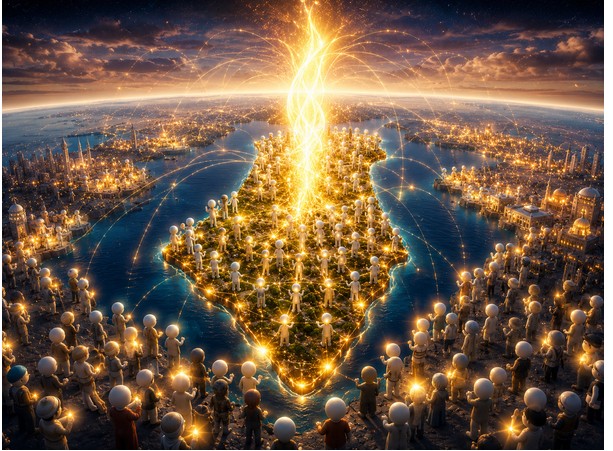
Why do army friends hold such a special place in our hearts? What changes in our mindset when we are called up for reserve duty in the middle of our everyday routines? Also, what principle from military life should we bring into our daily lives and society?
Let us start from the beginning. When we enlist in the army, we essentially stop thinking about the countless things that used to occupy our minds nonstop. What will we eat? What will we wear? What will we buy? What will we do? Where will we go for entertainment? In the army, what you are given is what you have. The ego is freed from its endless chase. It seems to shrink. The burden and pressure of the things people want to push on us and sell to us fall away, and we already begin to feel different.
In addition, we find ourselves living alongside people we did not choose. We learn to fight together and face challenges and dangers together. Mutual dependence requires us to constantly feel each other and operate as a single body. In the end, we become so close that we are willing to sacrifice ourselves for each other.
Later, in civilian life, the codes are completely different. People step on one another, disregard one another, and fail to see beyond themselves. The person considered successful is the one who stands independently, dominates everyone else, and comes out on top. Likewise, behaviors such as making concessions and giving space to someone beside oneself are often viewed as signs of weakness.
When people return for reserve duty, that spirit of camaraderie awakens again. They stop thinking in terms of “I” and begin thinking in terms of “we.” What are we eating? What are we drinking? How can we make everyone happy? When someone makes coffee, everyone sits together, even those who do not drink it. There is no destructive competition, no showing off. When there is a mission, it is taken on as a team.
If you ask reservists, “Would you like to live this way all the time?” the answer would undoubtedly be yes. But the general atmosphere in society is highly egoistic and unsupportive.
So what actually happens to us in the army? Where does this elevated feeling come from?
In general, the substance from which we are made is the desire to receive pleasure and enjoyment. We perceive everything through this desire. We constantly evaluate what might benefit and harm our ego. This is how our picture of the world is formed. We are each drawn to different things according to our ego. When the desire for pleasure changes, i.e., when our ego begins wanting something different, we perceive a different reality.
By nature, the ego directs us to care for our self-benefit, drawing pleasure and fulfillment from the environment into ourselves. It constantly examines how every situation can be used for personal gain. In such a state, a particular reality is perceived. However, when we begin to make room in our heart for others, caring about them instead of ourselves, valuing their desires more than our own, and placing ourselves in service to others, then our perception of reality expands. The pleasure and fulfillment experienced through such connection with others belong to a completely different level. A glimpse of this is sometimes felt in the army, which is why it can often felt as a unique and unforgettable experience.
If we take this concern for others to its ultimate conclusion, we might say the following: Imagine that you worked on yourself until all human beings became close to you, i.e., very close, beloved, as if they were your own children. What kind of reality would you experience then? The same reality you experience now? Not at all.
A new reality would open before you, a higher stage of development that is not naturally present in human beings. The sages who attained it call it a “spiritual degree,” and they developed an entire method that can be learned and practiced in a group setting. At this level of perception, we discover that a single all-encompassing force operates in the greater system of nature, a force the qualities of which are benevolence, love, and giving. This force increasingly fills us according to the level of love we have developed.
From a broader perspective, our evolution as a human species is pushing us toward such relationships between people. The world is becoming increasingly interconnected; everyone depends on everyone else, yet we are unable to get along in the same boat. The ego’s games are bringing us toward the danger of sinking. This is true globally, and it is especially true in Israel.
Our survival depends on learning to live like one large family, with a spirit of friendship, mutual responsibility, assistance, and support between us. This process is inevitable, and we, the people of Israel, must lead it. We need to provide an example of a more advanced and connected way of life that is suited to the conditions of our environment. The longer we delay, the worse things will become, for the world in general and especially for us. Hatred toward Israel will spread throughout the world, and we will find ourselves completely alone.
Whether or not we are aware of it, Abraham initiated the revolution of kindness and love for others. He sought to create peace and unity among all people. Although we later fell into unfounded hatred, and although the ego in Israel might be stronger than anywhere else in the world, each of us still carries a spark of self-sacrifice within. If we learn to connect these sparks through the same method of connection that Abraham established, a fire of love will ignite among us. Israel will become an educational, cultural, and spiritual powerhouse, and the world will come to learn and adopt this next form of human existence.
We are all one family.
Based on “New Life 145 – IDF as an Example of Connection” with Kabbalist Dr. Michael Laitman. Written/edited by students of Kabbalist Dr. Michael Laitman.
Posted in LinkedIn, Medium, Quora, The Times of Israel, Twitter X, YouTube