One of the fundamental principles of education is that a person learns only where his heart desires. This does not mean that education should simply follow a child’s existing interests. Instead, it means that the role of education is to build within a person an appreciation for the values we want him to acquire. Once those values become important in his eyes, he will naturally be drawn toward them and willingly pursue them. The key, therefore, is not the individual himself but the environment that shapes his desires. A person always values what his environment values, and his heart follows the examples and priorities that surround him.
For this reason, the primary concern of education must be the environment. If society admires competition, wealth, or fame, people will be drawn toward those goals. If society admires mutual responsibility, care for others, and contribution to the common good, people will naturally aspire to those values instead. Human beings are products of their environment. Therefore, education begins not with correcting the individual but with building the right social atmosphere around him.
The purpose of education is to develop a complete human being. Such a person understands that the most important principle in life is consideration for others. Whether one becomes a scientist, a doctor, an engineer, a laborer, or a leader is secondary. Primarily, every person sees himself as contributing to society and feels responsible for the well-being of others. When a person develops this attitude, he gains confidence, support, and a sense of belonging because he is aligned with the needs of the society around him.
This is why example is more powerful than instruction. Children learn not from what adults tell them but from what they see adults doing. A child constantly absorbs behaviors, attitudes, and values from their surroundings. If parents, teachers, and society preach one thing but act differently, education fails. The only way to educate a child is to educate the environment in which they grow. In this sense, the success of future generations depends entirely on the quality of the society we create around them.
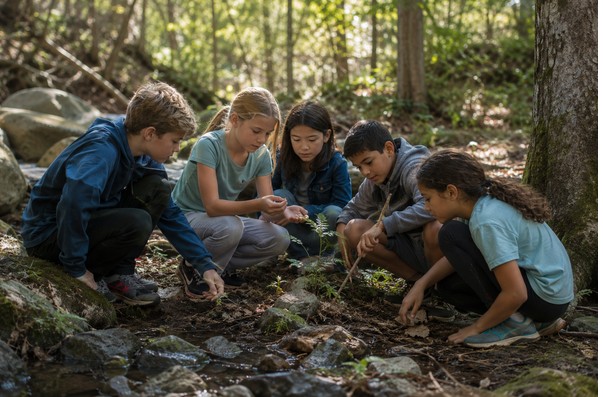
Group learning plays a unique role in this process. A child cannot truly learn values such as connection, consideration, and love for others through lectures alone. These qualities can only be developed in interaction with peers. Children learn most effectively from those who are similar to them, from friends of the same age or slightly older. Through the group, they experience cooperation, mutual support, and shared responsibility. They learn not merely by hearing principles but by living them. This is why the sages emphasized that education is acquired in a group. The group becomes the workshop in which a person transforms from an individual concerned only with himself into someone capable of feeling and caring for others.
As this process develops, something remarkable takes place. The differences between people do not disappear. Instead, they become a source of enrichment. Each person contributes his unique qualities for the benefit of the whole. Through mutual support and connection, the group develops a common feeling and understanding that are greater than the sum of its individual members. Every person becomes enriched by the perspectives, talents, and experiences of others. This is how people learn to rise above their narrow self-interest and perceive reality more objectively and comprehensively.
The ultimate goal of education is not merely to prepare a person for a profession or to help him earn a living. Its purpose is to teach him how to connect with others in a way that reveals the deeper and higher laws of nature. Through harmonious relationships based on mutual care and responsibility, a person begins to perceive the interconnected system in which all of humanity exists. He discovers that life is governed by a force of connection, love, and bestowal, and that true fulfillment comes from aligning himself with that force. This understanding gives a person confidence, purpose, and a clear direction in life. It lets him see beyond the uncertainty and confusion that characterize modern existence and to participate consciously in humanity’s harmonious development.
Based on “New Life 192 – The Foundations Of Education In Jewish Culture, Part 2” with Kabbalist Dr. Michael Laitman. Written/edited by students of Kabbalist Dr. Michael Laitman.
Posted on Facebook, Instagram, LinkedIn, Medium, Quora, Twitter X, YouTube