|
Getting your Trinity Audio player ready...
|
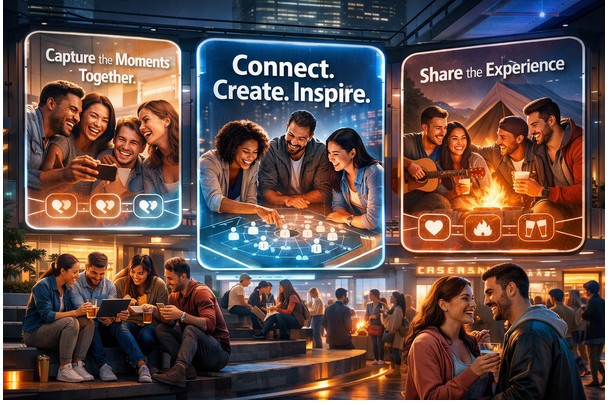
The fundamental force that drives all of nature is the desire to enjoy. What distinguishes the inanimate, vegetative, animate, and human levels is the size and type of the desire to enjoy and to exist in well-being. The human desire to enjoy constantly develops and awakens new needs. Today we are at the beginning of the integral era, a completely new evolutionary stage in which human beings are transforming from creatures that struggle against one another into a single integral system in which all parts are connected and complement one another. This is why the world has become so interconnected and why mutual dependence is increasing.
Organizations that succeed in recognizing this direction of development, and invest in learning, practicing, and implementing the integral approach among their people, will be able to adapt themselves in advance to the changes that will occur in the environment. With this broader perspective, we can look at the markets, the consumers, and the emerging new atmosphere.
In the past we used to run between ten clothing stores searching for something nice, enjoying every moment, and finally buying a beautiful shirt. It was real pleasure. The enjoyment came from the shopping process itself, from the purchase, but mainly from the feeling that we were walking through beautiful places with money in our pockets and could choose whatever we wanted. It felt like a taste of the good life.
Today we obey the constantly changing commands of fashion much less and wear what is comfortable for us. The purchasing process itself excites people less. It has become more practical: I need something, I buy it, and that is it. There is no reason to waste time wandering through stores. What does make us feel good? Coming to places where there is an atmosphere of connection between people. A positive atmosphere attracts us, and this is what we are happy to spend money on. Vacations, time off, trips, and adventures together with other people, not alone.
This sense of togetherness creates the difference between yesterday’s and tomorrow’s consumer. Why? It is because there has been a change in the source from which we draw enjoyment and pleasure. It has shifted from the individual person to the connection between people. The focus has moved from individual action to shared activity. If in the past we looked with envy at someone wearing beautiful clothes and thought, “Wow, what nice clothes, I want that too,” today our attention is drawn to interpersonal communication, warm relationships, support, reciprocity, and love. The enjoyment that people create in their connection with one another is beginning to capture our attention.
We are changing. This is the meaning of the integral era we are entering. Our perspective is beginning to shift from “one” to “many,” from an individual outlook to an integral one. The source of our feeling of pleasure is “moving house.” It is no longer found within a single person or object but in the connection between people. The change might not yet be very visible and is still difficult to identify clearly on the surface, but for planning marketing strategy this is the future.
The new desire that is awakening is a desire for connection, for bonding, for play, and for shared experience. People want to feel alive, connected, and linked with others as much as possible.
The desire for social experience should influence the types of products or services we offer the public. The style of marketing, service, and even product packaging must all be adapted to the consumer’s new desire: to enter a new adventure and build warm connections with others. This new desire will continue to grow and will shape the tendencies and preferences of consumers.
There is no doubt that the integral marketing concept points at a new direction. It focuses products and services on cultivating connection between people. If in the past the emphasis was on being “user-friendly,” today the emphasis should shift to being “friendly to connection between users.”
This principle should also be expressed in advertising. Instead of presenting a single individual in advertisements, it is better to show several people together and highlight how the product helps create connection between them.
Games of the future should also games of connection. They should not be one against another, where one wins when the other loses, but games that help us communicate with each other, feel closer, and strive together to succeed in a common challenge.
The trend of change in consumption habits is beginning to appear in practice, but we should not ignore the fact that the “old” individual consumption still exists. Here it is important to understand the development process that is taking place.
Two forces are operating in the market at the same time. One force is our inner desire, which is changing from individualistic to integral as a result of natural evolution. The second force is the general human network of connections. The problem is that the discovery of the global network is occurring much faster than our personal inner change.
This network can be compared to a fishing net full of fish being pulled out of the water. All of us are caught together in the same closed and increasingly interconnected world, like fish in that net.
There is no precise synchronization between these two parallel processes. It is clear that the world is changing and becoming interconnected faster than we as individuals are changing. We still feel individualistic and approach everything in life from that perspective.
In other words, the fishing net is being revealed, but each fish within it still feels as though it is alone. The gap between the overall reality of the fish caught together in the net and the feeling of each fish as an individual is what causes today’s multidimensional crisis.
This raises the question: Should organizations continue crawling forward and remain behind despite everything, or should they give themselves momentum and advance their thinking toward the integral network appearing on the horizon?
From one perspective, companies should not run too far ahead, because their products or services might be ahead of their time and may not yet be in sufficient demand. From another perspective, it is still worthwhile to begin developing the new approach and gradually create attraction toward it among the public. In doing so they will move ahead of competing companies, lead the market, and brand themselves as leaders of the new business perception.
Today a window of opportunity has opened for companies that should not be ignored. With a relatively small investment, it is possible to capture the integral business space, be the first, be unique, and move boldly into the future.
Based on “New Life 110 – Marketing Strategies for the Future, Part 1” with Kabbalist Dr. Michael Laitman. Written/edited by students of Kabbalist Dr. Michael Laitman.
Posted on Facebook, Instagram, LinkedIn, Medium, Quora, Twitter X, YouTube