|
Getting your Trinity Audio player ready...
|
If we look back 1,000 to 2,000 years ago, we will see preventive medicine in practice. It was important to keep people healthy so that they could defend themselves and their families, villages, cities, and nations. Accordingly, various practices developed to prevent diseases using the means they had at the time.
Today, we have reached a situation where money has become the driving force behind the medical system, turning medicine into big business. Health ministries needs patients to justify their budgets, as do hospitals and pharmaceutical companies. This is today’s reality, even if it is unpleasant to admit. On the way to genuine change, the healthcare system will need to change its goals from curing the sick to ensuring that people do not get sick in the first place.
Preventive medicine, in the full sense of the word, must expand to our whole environment: where we live, what we breathe, how we move, under what conditions we work, what we eat, how we sleep, what our daily routine is, and the quality of our relationships. Anything that could constitute a factor for future illness should be included in the field covered by preventive medicine. A well-oiled health system should set requirements and boldly state what is right, wrong, effective, and ineffective with regard to keeping people healthy and preventing disease.
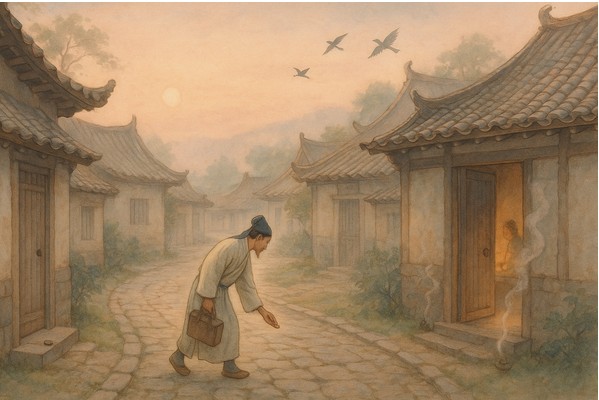
In ancient China, the village doctor would travel from house to house, and on each doorstep a coin awaited him as his livelihood. If there was no coin, it meant someone in the house was sick and the doctor had to enter and treat them. The idea was that the doctor earned his living by keeping everyone healthy.
According to the integral approach to education, which views the human being, society, and nature as a single whole, preventive medicine means first and foremost caring for balance in the highest system of nature, the system of human relationships. An influence radiates from the human level to all the systems beneath it: the still, vegetative, animate, and the human body. Therefore, we must work to transform human relationships from egoistic to integral, with mutual help and support dwelling in our connections. The more we learn how to do this, and there is a complete, methodical approach for doing so, the more we will see improvements in health as well as in myriad other problems on personal, social, global, and ecological scales.
Take, for example, the amount of pressure that children and adolescents experience at school. Many children go to school and end up encountering a competitive, aggressive, and even violent atmosphere. Such an environment harms their nervous system and their health, and it also affects the family atmosphere. Therefore, it would be worthwhile to examine the sources from which the younger generation absorbs heightened egoistic attitudes toward others and the environment—media, TV shows, social networks, and video games—and begin to cleanse them.
In addition, we would be wise to set an overriding goal for educational institutions: to build positive connections among everyone. With proper guidance, every classroom can become a place of great fellowship. This would provide every child a safe environment that lets them bring out their best.
The workplace is many adults’ key living area. It is thus worth investing in the improvement of relationships and the general workplace atmosphere. As is well known, habit becomes second nature. Accordingly, if we dedicate time to connection workshops among employees, we will see improvements not only in health, but also in creativity and productivity. Everyone benefits at every level. It would also be worthwhile to set aside time for a common physical activity. It is both healthy and brings people closer at the same time.
When society comes together in a unifying harmonious embrace, that will be our best defense against negative phenomena that drives us to illness. It is no quick-fix solution, but a comprehensive one. On the way to this comprehensive unifying solution, we should apply small steps. For instance, we could have stress-relieving happiness exercises where we suddenly play the sound of rolling laughter over loudspeakers, and within moments everyone who hears that sound will also laugh. Laughter relaxes, brings smiles, and heals.
The daily commute to and from work is another saga altogether with its endless traffic jams, road rage, and air pollution. Suppose we made a common decision that we have had enough, and we need to change our perception, determining that we only allow public transportation, bicycles, scooters, or walking into the city. Noise would decrease, the air would clear, and walking would calm us. There is no activity more natural for the body than walking, and it suits almost everyone of any age and in any condition.
Food and nutrition are, of course, a central component in the picture. Can you imagine a world without junk food? Without advertisements encouraging excessive and harmful eating? How would our health change?
When we talk about a healthy lifestyle, body care and appearance also come up. Everyone wants to feel attractive, appealing, and are willing to work hard for it. But in truth, what makes a person attractive comes from a different direction.
Someone who develops the ability to feel others, to enter into their desires, to sense what they lack with the intention to do good to them is felt by others as attractive and beautiful. Like a loving mother who only thinks about how to benefit her children, and therefore seems perfect to them, they will never leave her.
Every person needs the warmth and security they received from their mother, and longs for someone to understand them, listen to them, and appreciate them. Everyone has their ups and downs, and whoever radiates love around them is perceived as a source of a positive spirit and inspiration. “Love your neighbor as yourself” is the principal law of creation, and whoever excels in it will be felt as the most beautiful of all.
Therefore, the root of all diseases and problems is imbalance. If we balance human relationships, and together seek to remove egoistic values, unnecessary pressures, air pollution, and unhealthy food from our lives, while adding physical activity and positive humor, we can then truly say we have begun to engage in preventive medicine.
May we be healthy, well connected, and whole.
Based on “New Life 95 – A Healthy Lifestyle and Preventive Medicine” with Kabbalist Dr. Michael Laitman, Written/edited by students of Kabbalist Dr. Michael Laitman.
Posted on Facebook, Instagram, LinkedIn, Medium, Twitter X, YouTube, Quora