|
Getting your Trinity Audio player ready...
|
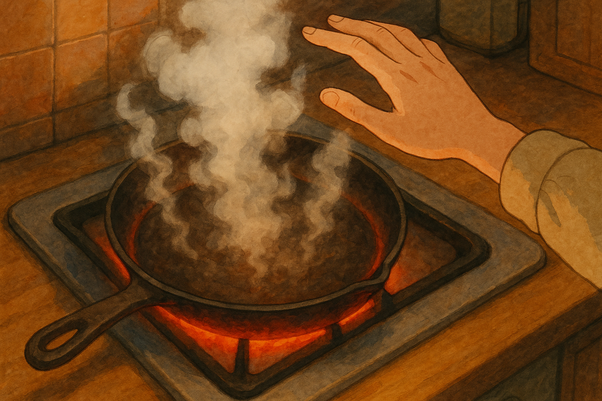
Where does the sensation of pain come from? What is its role? What is the difference between today’s pains and those felt in the past? Can we do anything to ensure there will be less pain tomorrow?
The basic substance from which every object in nature is built is the will to receive pleasure and delight, which can also be called the “will to enjoy,” and the “will to exist in goodness.” This will drives us to move away from suffering and draw closer to what seems beneficial. The more developed the will to enjoy in a certain creature, the more advanced systems it constructs to ensure its well-being and state.
The nervous system is one such system. It is multifaceted and multilayered, and it connects with other systems. For example, if our mood changes, we might not feel pain. Moreover, sometimes the nervous system can be “programmed” so that a certain stimulus will not trigger pain, and might even be felt as pleasurable.
Generally, pain protects us. If we felt no pain, we would not sense what transpires in our body. For instance, we could put our hand into fire, not feel the pain of it burning, harming ourselves much more than if we felt pain. Likewise, a disease could develop inside us, and without pain we would be unaware of it nor seek treatment. When something hurts, nature signals a malfunction.
Pain extends across many levels, and it is sometimes hard to distinguish between them: physical, bodily, emotional, and spiritual, pain from the past or from the future, and pain within us or in someone we love or hate. Accordingly, pain goes beyond the boundaries of our own body and enters from external systems to which we are connected. The nature of our connection to those systems determines what we will feel each time, from pain to joy. For instance, a mother feels pain when her children are hurting.
From the standpoint of the will to receive, the will to enjoy, everything is reduced to a simple equation: when it is full, it feels good, and when it is empty, it feels pain. Of course, there are several degrees within such a setup.
Another important point to understand is that pain begins in states where we feel ourselves. To illustrate, imagine we are now sitting on a chair. When is this sitting comfortable? When nothing presses too much. We feel our body limited by the chair, and that gives us a clear sense of reality. But if the pressure of the chair crosses that fine line, then we begin to experience discomfort. In this same way, each sense has its own range within which we feel good. Below that threshold, we do not feel it at all, and above that threshold, we feel it as excessive. When we feel pain, it signals that we have crossed beyond that range.
Incidentally, something similar can be seen in relationships: couples cannot live without sometimes arguing and feeling pain. They need to sense the boundaries, to see where they overlap, and where they still require corrections.
The stories, plays, and films we have created over the generations have largely dealt with pain and unpleasant feelings. Through pain we sense the world, for the foundation of creation is lack, pain, the desire for fulfillment. As we already noted about the will to enjoy that is embedded within us, its main concern is not to be empty, i.e., not to feel pain or suffering. Pain in a certain situation directs it to develop, to change, to move toward a better state.
From a broader perspective, today we live in a special time, where the very nature of pain is changing. It can be said that until the 20th century, we developed individually, where each felt their own pains. From the mid-20th century, we began to discover that we are all connected in one system. Not only because of commerce, economy, culture, and industry that turned the world into a global village, and not only because of the amplification of this trend through the Internet and media. From within, something began revealing itself that bound all human beings together. In parallel, more and more pains, worries, fears, anxieties, and depressions began to appear. If in past centuries these belonged to elites, today these are felt among all people. Our myriad pains have become ever more contagious, circulatng among everyone. The world projects bad movies onto us, throws us between all kinds of states, and it is impossible to cut off the connection, to shut the blinds. It penetrates us against our will, whether we want it or not.
So what can we do about it?
According to the integral approach to education, today’s pains are actually labor pains. A new world is about to be born, and we will be renewed within it. All the suffering we feel today is due to us rejecting a connection of complementarity, reciprocity, and warm and loving human relationships. The conflict between the direction of integral development and the egoistic tendency, which is also intensifying greatly, is the root of all crises.
Nature will eventually compel humanity to function like organs in a single body, completing one another. The sooner we grasp this idea and build integral connections ourselves, the sooner we will remove the pressing boundaries. Then, and only then, will pains vanish at their root, and in their place will come new fulfillments: health, joy, and meaning—supreme pleasure and delight.
Based on “New Life 78 – Pain” with Kabbalist Dr. Michael Laitman, Written/edited by students of Kabbalist Dr. Michael Laitman.
Posted on Facebook, Instagram, LinkedIn, Medium, Quora, Twitter X, YouTube